Web Proposal
https://diablo-proposals.web.app/guidelines
NB: This proposal contains lots of images: the Web version is recommended.
–
INTRODUCTION
This guide compiles thoughts on the future of the ARPG genre, through the eye of several video games. It starts with broad general principles, then dives deep into the subject using opiniated, illustrated and argued proposals. The reader is welcome to comment this paper on the Diablo 4 forums.
GAME
DEFINITION
A leisure activity, subject to conventional rules, involving a win or a loss, and where chance, intellect, action and experience come into play to varying degrees.The Larousse Dictionnary
The game controls:
- Leisure
- Rules
- Win or Loss
- Chance
The player controls:
- Intellect
- Action
- Experience
LEISURE
- Not labour
- Escapism
- Relaxing
- Fun
RULES
- Canvas of contraints
- Meant to be bypassed
Their strength, and their speed, are based in a world that is built on rules. What you must learn is that these rules are no different than the rules of a computer system. Some of them can be bent. Others can be broken.Morpheus, The Matrix
WIN OR LOSS
-
Binary outcome (0|1)
-
Ternary outcome (0|1|?) *
-
Numeric value, ideally continuous (+42|-42)
-
The quantum realm accepts the superimposition of Win and Loss, a delayed outcome whose status is unknown. This happens when the values to execute a formula are currently unknown, but will be known in the future, when the formula will be applied, at a fixed point of of time, or as soon as the values are known.
CHANCE
- Core mechanism
- Unbypassable
- Unpredictable
- Perfectly distributed
https://diablo-proposals.web.app/images/guidelines/standard-deviation-gaussian-normal-distribution.jpg
Normal Distribution of chance. SD = Standard Deviation.
The Central Limit Theorem states that given enough amount of rolls, Chance is perfectly distributed.
https://en.wikipedia.org/wiki/Central_limit_theorem
Chance will, on average, form a normal distribution, also called a gaussian distribution.
In probability theory, the central limit theorem (CLT) states that the distribution of a sample variable approximates a normal distribution (i.e., a “bell curve”) as the sample size becomes larger. The central limit theorem (CLT) states that the distribution of sample means approximates a normal distribution as the sample size gets larger, regardless of the population’s distribution. Sample sizes equal to or greater than 30 are often considered sufficient for the CLT to hold.Investopedia - Central Limit Theorem
https://www.investopedia.com/terms/c/central_limit_theorem.asp
In practice, after 30 rolls, any distribution, even completely skewed from the start, becomes perfectly balanced.
INTELLECT
- Build
- Planning
- Strategy
- Theory Crafting
ACTION
- Manual (reflex)
- Automated (trigger)
EXPERIENCE
- Rewarding
- Test and Learn
- Trial and Error
CORE VALUES
Mathematics (Exponential, Factorial), RNG (Random Number Generator) and Loot Hunting are considered as fundamental values, extremely important to engage users with the game, renew it, and make it addictive.
https://diablo-proposals.web.app/images/guidelines/scrabble-deck-game-over.jpg
The ultimate deck.
The main engine is a combinatorial game, where the player gets random items, in order to build a powerful deck.
The deck constantly changes, and forces the player to adapt its strategy to the current situation (Darwinism).
Great examples are Robbers’ rummy, the Scrabble, …etc.
Everything else is secondary, and has to be considered as a contextual and progressive enhancement (clothing).
This includes the world, story, sense of progression, UX, possible actions and degree of automation.
Some aspects of the game (world, story) can also benefit from the combinatorial aspect through procedural generation, and by doing so, increase their degree of importance.
CLASS
CLASS LOCK
- Monoclass
- Monolithic
- Strongly typed
- Limited customization
- Developer’s choice
Class-lock is a bad design.
FEATS
- Multiclass
- Granular
- Composable
- Weakly typed
- Unlimited customization
- Player’s choice
Traits and Modules are well-known by developers to be the best solution for class inheritance (multiclass).
https://en.wikipedia.org/wiki/Trait_(computer_programming)
https://en.wikipedia.org/wiki/Modular_programming
https://diablo-proposals.web.app/images/guidelines/baldurs-gate-3-feats.jpg
Traits and Modules also exist in Dungeons and Dragons 5th Edition, into the form of Feats.
https://www.aidedd.org/dnd-filters/feats.php
Feats are granular and composable powers that any character can opt-in, when conditions are met.
A good usage would be to allow class to give unique starting traits.
For example, a Barbarian would have advantage on Strength, Dual Wielding, Two-Handed melee weapons.
These options could later on open the path to a new Feat, Dual Wielding Two-Handed melee weapons.
It doesn’t mean a Barbarian cannot carry a dagger, nor throw a fireball, but it will be harder to naturally deal decent damage with them, and might require characteristic thresholds, a special itemization, or non-innate Feats.
On the other hand, a Sorcerer can opt-in Feats that are baked with the Barbarian in order become a Melee Mage.
This way, players can customize their character exactly like they want.
They are incentived to play class A rather than class B, but never forced to do so.
One huge advantage is the build diversity, as Feats open the path to multiclass.
Feats should play an active part of the leveling system (not reserved to Paragon).
SKILLS
DEFINITION
Skills extend and specialize the available actions.
When a game is well-balanced, every skill has no other impact than changing the playstyle.
LEVEL REQUIREMENT
LEVEL 1 FRIENDLY
- No level requirement
- All skills are equippable
- All the slots of the skillbar can receive a skill
LEVEL SCALING
Cooldown, Resource Cost and Player’s Level are meant to balance the relative power of every skill.
Casting a Level 1 Army of the Dead with a 60 seconds cooldown is acceptable.
This design requires the skill damage to be based on player’s level.
One benefit is the sense of progression.
SKILL BOARD
SKILL TREE
- Inject dependencies
- Sequentialize nodes
- Oriented graph
- Amputated graph
- Acyclic graph
https://diablo-proposals.web.app/images/guidelines/tree.jpg
Examples:
- Diablo 2
- Diablo 4
Skill Tree is an amputated oriented physical graph, thus a bad design.
SKILL SUBTREE
- Tree
- Granular skills at root
https://diablo-proposals.web.app/images/guidelines/subtree.jpg
Examples:
- Last Epoch
- Nova Drift
Skill SubTree is an amputated oriented physical graph, thus a bad design.
SKILL WEB
- Tree
- With cycles (Cyclic Graph)
https://diablo-proposals.web.app/images/guidelines/web.jpg
Examples:
- Path of Exile
- Wolcen (Rotating Gate of Fates)
- Diablo 4 Paragon Boards
Skill Web is an amputated oriented physical graph, thus a bad design.
ORIENTED GRAPH
All these solutions are oriented graphs.
https://diablo-proposals.web.app/images/guidelines/precedence.jpg
They imply dependencies between nodes.
Dependency should be avoided in favor of granularity and composability.
Trees, subtrees, webs and any form of oriented graph are a bad design.
EXCLUSION
- Independant
- Exclusive (OR)
https://diablo-proposals.web.app/images/guidelines/exclusive-or.jpg
Examples:
- Diablo 3
This mechanic is often referred as “Choice”.
While being independant, mutually exclusive (OR) nodes violate the principle of composability.
Composability, deeper and tastier, is always a better “Choice” than Exclusion.
Exclusion is a bad design.
AMPUTATED GRAPH
All these solutions are amputated graphs.
They imply the deliberate impediment of combinations.
Impediment should be avoided in favor of granularity and composability.
Trees, subtrees, webs, exclusion and any form of amputated graph are a bad design.
PHYSICAL GRAPH
Most of these solutions are physical graphs.
They imply the representation of links constituting the combinations.
Such a representation cannot scale, as it follows a mathematical rule, using an exponential growth.
- Let N be the number of Nodes
- Let L be the number of Links
- Let C be the number of Combinations
The formulas are:
L = N x (N - 1) / 2 ≃ N x N ≃ N²
C = N!
| Nodes N | Links L | Combinations C | L Formula | C Formula |
|---|---|---|---|---|
| 1 | 0 | 1 | 1*(1-1)/2 | FACT(1) |
| 2 | 1 | 2 | 2*(2-1)/2 | FACT(2) |
| 3 | 3 | 6 | 3*(3-1)/2 | FACT(3) |
| 4 | 6 | 24 | 4*(4-1)/2 | FACT(4) |
| 5 | 10 | 120 | 5*(5-1)/2 | FACT(5) |
| 6 | 15 | 720 | 6*(6-1)/2 | FACT(6) |
| 7 | 21 | 5040 | 7*(7-1)/2 | FACT(7) |
| 8 | 28 | 40320 | 8*(8-1)/2 | FACT(8) |
| 9 | 36 | 362880 | 9*(9-1)/2 | FACT(9) |
| 10 | 45 | 3628800 | 10*(10-1)/2 | FACT(10) |
| 11 | 55 | 39916800 | 11*(11-1)/2 | FACT(11) |
| 12 | 66 | 479001600 | 12*(12-1)/2 | FACT(12) |
| 13 | 78 | 6227020800 | 13*(13-1)/2 | FACT(13) |
| 14 | 91 | 87178291200 | 14*(14-1)/2 | FACT(14) |
| 15 | 105 | 1,30767E+12 | 15*(15-1)/2 | FACT(15) |
https://diablo-proposals.web.app/images/guidelines/links.jpg
https://diablo-proposals.web.app/images/guidelines/combinations.jpg
In order to avoid complexity, thus non-scalability, developers deliberately sever links, thus combinations.
They create amputated graphs, simply because their initial choice of representation is mathematically wrong.
Physical graphs should be avoided in favor of virtual graphs, using virtual links.
Trees, subtrees, webs and any form of physical graph are a bad design.
SKILL MATRIX
The Matrix is everywhere. You have to see it for yourself.
Morpheus, The Matrix
https://diablo-proposals.web.app/images/guidelines/diablo-4-proposal-1-skills-matrix-a.jpg
An example of a Skills UI using a Virtual Matrix could be:
https://diablo-proposals.web.app/images/guidelines/diablo-4-proposal-9-skill-matrix-2.jpg
A Skill UI that is scalable, searchable, auto-reordered, console-friendly, 1-screen, 1-click.
Intrinsic qualities:
- Independancy
- Granularity
- Composability (AND)
- Scalability (Virtual links)
This way:
- Players choice rather than developers choice (customization)
- Every point spent activates a useful node (no point wasted just because dependency)
- Complex combinations can be represented (depth, taste)
- Skills are accessible immediately (freedom, immediate satisfaction)
Limits the game should apply:
- Maximum points per character
- Maximum points per node
These restrictions alone are sufficient.
They will allow the game to scale the power of the skills through the progression of experience.
A Mime class learning skills from enemies would benefit from such a skills UI:
https://diablo-proposals.web.app/images/guidelines/diablo-4-proposal-15-mime.jpg
The Skill Matrix allows an infinite amount of skills to be represented, along with their specialization nodes.
- Item skills
- Quest skills
- Learned skills (Mimic)
- Temporary skills (Contextual)
- Multiclass skills
- …etc.
RANDOM SKILLS
SELECT A NODE IN A POOL OF RANDOM NODES
Nova Drift has no class and no item.
https://store.steampowered.com/app/858210/Nova_Drift
Instead, everytime a skill point is available to spend, the player selects a node among 7 random nodes (cf the Nova Drift wiki).
https://nova-drift.fandom.com/wiki/Nova_Drift_Wiki
As the only acceptable dependency, a specialization node cannot be rolled before the corresponding skill has been selected.
New players are more likely to catch the skills complexity if they drop one by one.
Every game feels different, which is great for replayability (fights boredom).
RANDOM SKILL LOOT
Adapting the node randomness strategy to a loot-based game is possible.
The game simply has to drop nodes (Skills or Specializations) and allow the player to learn them.
Once learned by the character, these nodes no longer drop.
In Dungeon Siege, spells are looted:
https://store.steampowered.com/app/39190/Dungeon_Siege
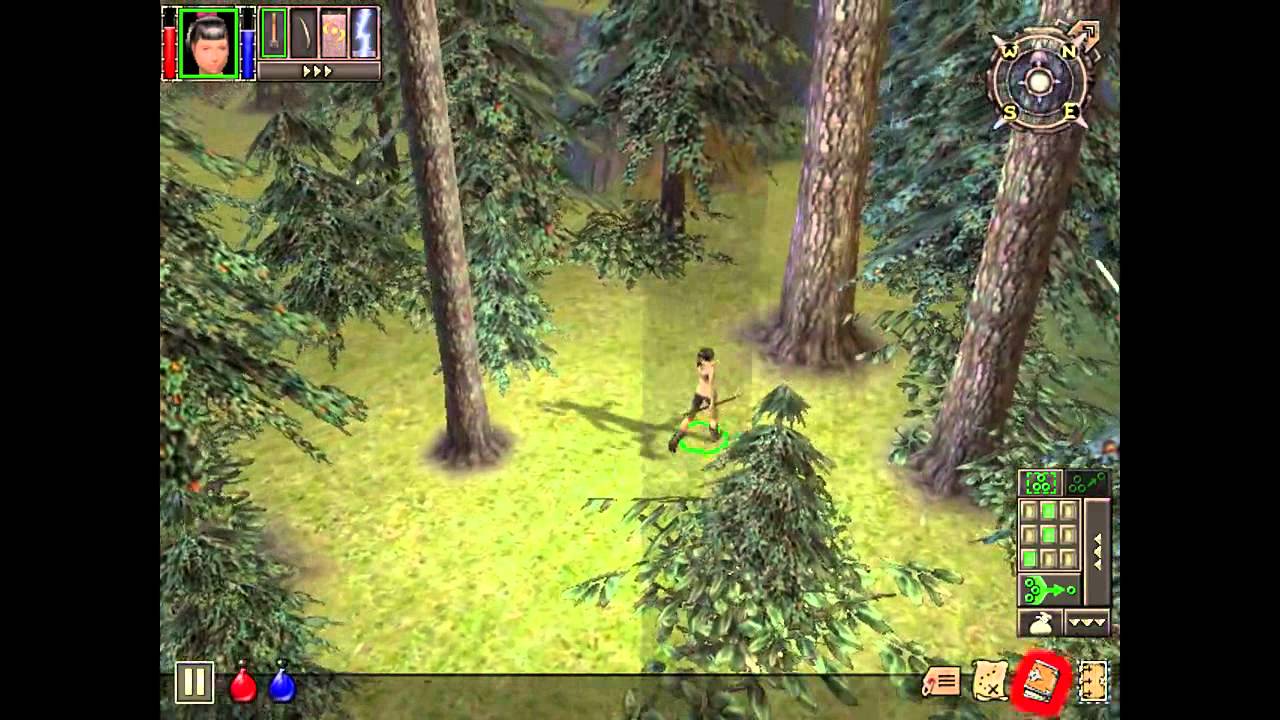
Look at the spell Fireshot on the ground, and the spell Zap looted after the first kill.
They are literally equipped from the inventory.
This mechanic can be improved by learning automatically and permanently the drops, then equipping them from the skills UI.
This way:
- Nodes drop randomly
- Every game is different
- Replayability is increased
- Nodes can be activated at will
- Nodes can be deactivated at will
- Nodes are automatically and permanently learned when they drop (“New skill learned !”)
- New players can handle the depth of the skills UI overtime (One node drop after another)
RESPECIALIZATION
- Limited
- Fast
- Free
LIMITED RESPECIALIZATION
Respecialization might need limitations:
- Cooldown (No Bot switch)
- Place (NPC in town)
Such limitations are needed only if abuses are observed.
FAST RESPECIALIZATION
Just like buying on the web, respecialization should be a fast operation, performed in exactly 1 click.
The Skill Matrix allows to select and unselect any node in exactly 1 click.
Left click to select and Right click to unselect is a common strategy.
If a node involves multiple points, Ctrl or Maj keys can be used to accelerate the process of allocation and dealoccation of points.
FREE RESPECIALIZATION
Players constantly change their playstyle, in order to:
- Familiarize with the game
- Adapt to the unpredictable loot
- Adapt to the unpredictable situation
- Fight boredom and monotony
Subsequently, the game should follow the principles of:
- Test and Learn
- Trial and Error
In a heavily randomized environment, these principles suggest that respecialization should be a free operation.
Players should not be financially penalized when the root cause (unpredictable chance) is out of their control.
Financial operations should be the consequences of an informed and controlled choice from the player.
GOLD SINKS
Gold Sinks answer the need to control and evaporate the gold amount collected by players.
MINI GAMES
- Relax between 2 battles
- Allows micro transactions
- Allows double currency
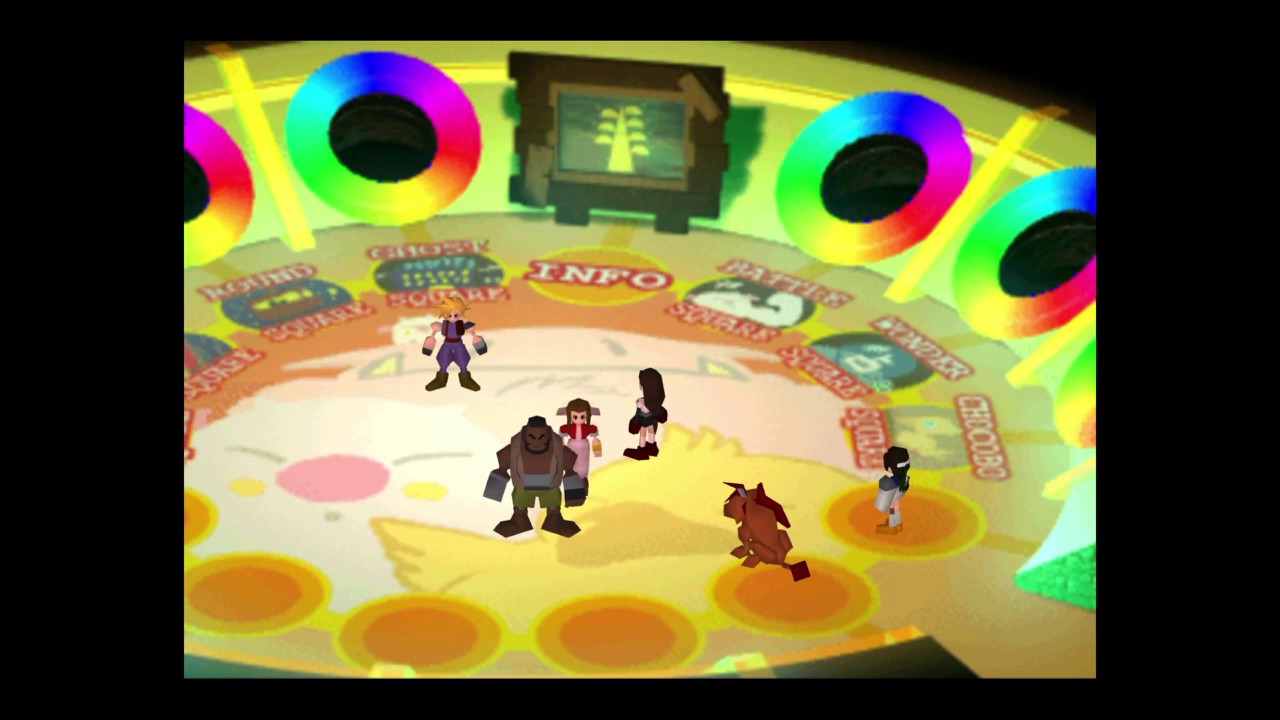
The Gold Saucer is notable in gameplay for being home to a number of minigames, particularly at the Battle Square and Chocobo Square. It is divided into seven attractions (possibly an allusion to the game’s title), and uses GP as its own currency, which can only be won from its minigames.
Final Fantasy 7 - Gold Saucer
https://finalfantasy.fandom.com/wiki/Gold_Saucer_(Final_Fantasy_VII)
CASINO CURRENCY
GP is used as a form of currency in the Gold Saucer. GP is most often won through games in the Wonder Square, or races in the Chocobo Square. It can also be bought from a man who sometimes appears at the entrance to the Gold Saucer, at an exchange rate of 100 Gil to 1 GP. GP can be used to play certain games, rest at the Inn, and can also be exchanged for prizes with a woman in the Wonder Square.
Final Fantasy 7 - GP
https://finalfantasy.fandom.com/wiki/Currency#GP
While Diablo Immortal was critized for its heavily monetization scheme and its double currency system, these options are perfectly acceptable in an isolated region acting as a Casino, where it is natural to trade real money for in-game currency.
MOUNT
Mounts have a great fantasy potential, when they are properly implemented.
MOUNT ON WORLDMAP
- Can enter buildings (church)
- Are clunky (slow or stop in outdoor narrow passages)
- Cannot climb or jump from cliffs
- Bypass enemies encounters (destroys a core mechanic)
https://diablo-proposals.web.app/images/guidelines/climb-down.jpg
https://diablo-proposals.web.app/images/guidelines/climb-up.jpg
Useless clunky mounts.
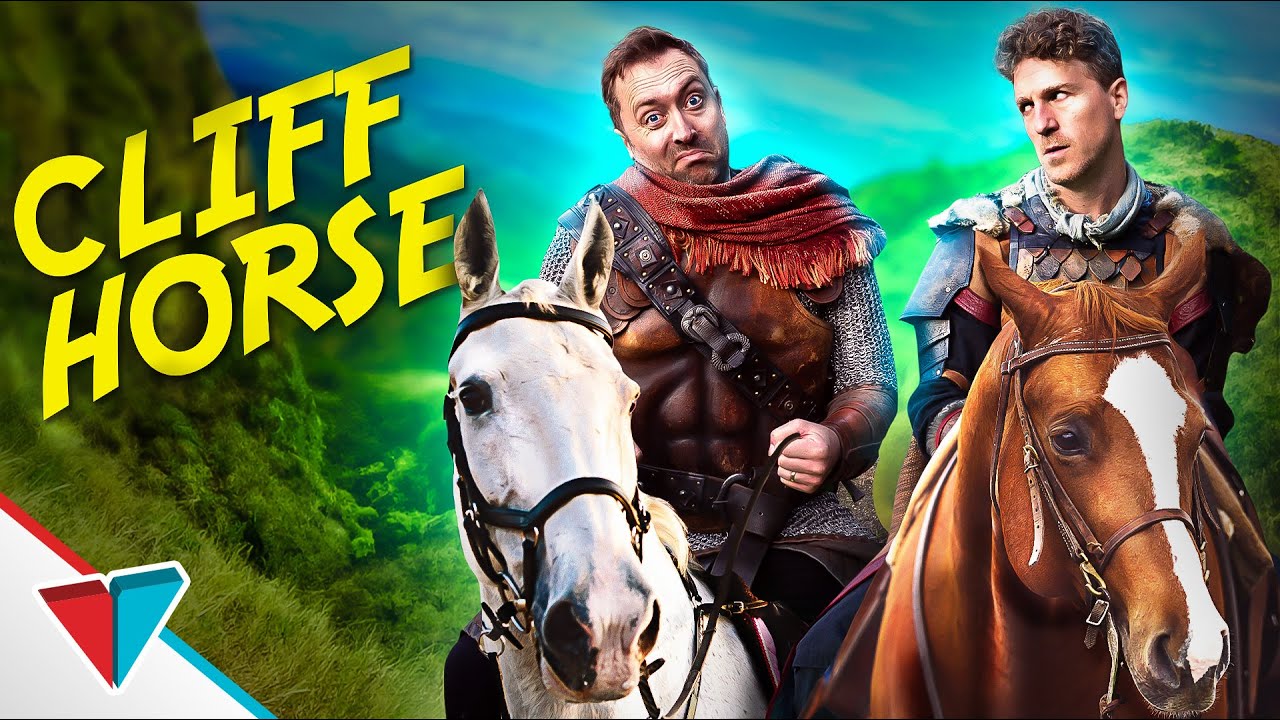
Not a solution.
Such a disfunctionnal mechanic should be avoided, in favor of a galaxy of waypoints.
Mount on worldmap is a bad design.
MOUNT CATCH
In Final Fantasy 7, the player has to catch its own Chocobos.
https://diablo-proposals.web.app/images/guidelines/ff7-chocobo-map.jpg
Depending on the region, the base quality of the Chocobo increases.
MOUNT BREEDING
Later, when the party can rent stables at the Chocobo Farm (after acquiring the Highwind), the party can bring their own Chocobos to race. Racing is a vital part of Chocobo breeding.
Final Fantasy 7 - Chocobo Square
https://finalfantasy.fandom.com/wiki/Chocobo_Square_(Final_Fantasy_VII)
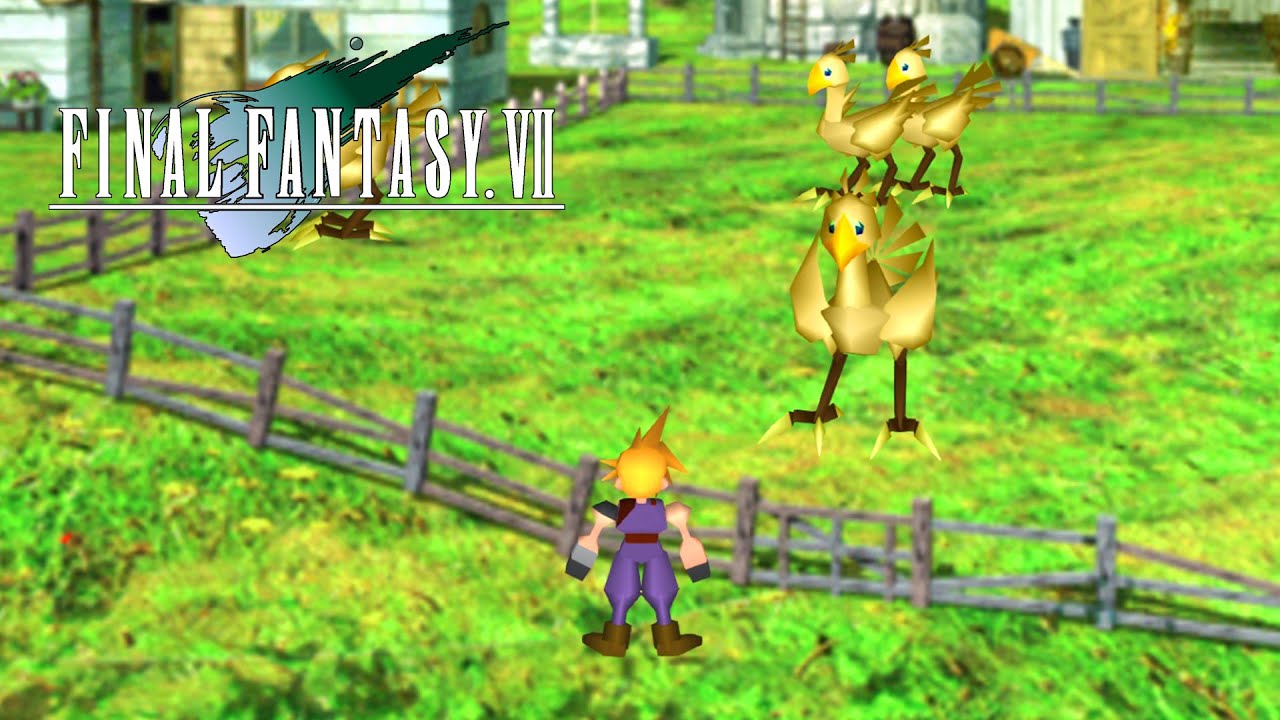
On Chocobo reproduction, there is a chance, given food and competition races, to get an improved Chocobo (better quality, better statistics, runs faster).
Mounts are perfectly acceptable in an isolated region acting as a Farm, where it is natural to breed them.
MOUNT RACES
Epona is first seen when she is just a foal at Lon Lon Ranch. Link can then participate in a horse race against Ingo with Epona as his steed. If Link wins, Ingo lets him keep Epona.
The Legend of Zelda - Epona
https://zelda.fandom.com/wiki/Epona#Ocarina_of_Time
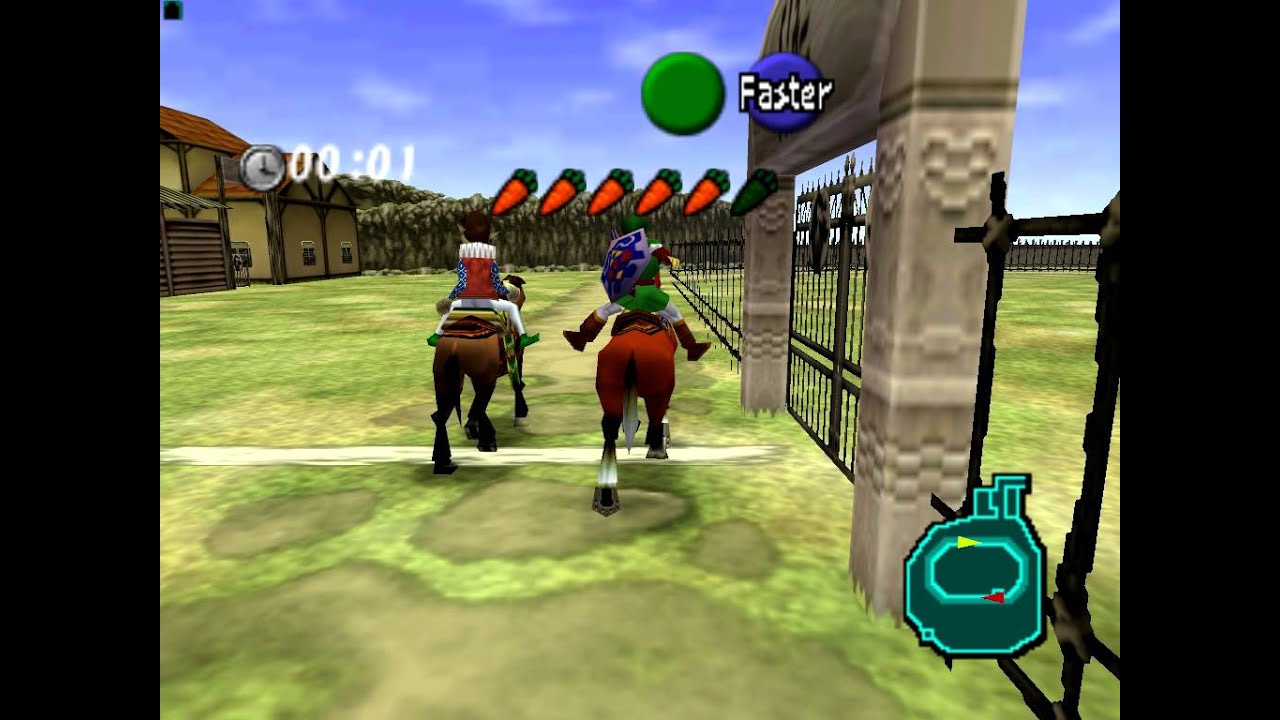
Epona can be used to play the Horseback Archery Range minigame in Gerudo’s Fortress
The Legend of Zelda - Epona
https://zelda.fandom.com/wiki/Epona#Ocarina_of_Time
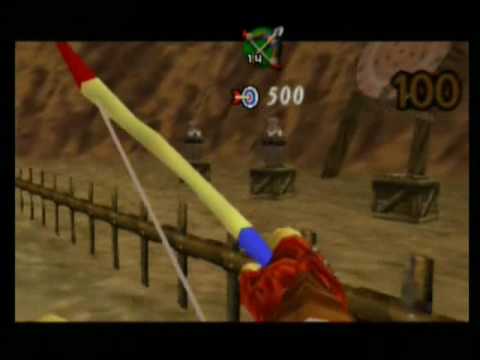
Chocobo Square is a section of the Gold Saucer in Final Fantasy VII. It hosts the Chocobo racing minigame, which can reward several unique Materia and boost Chocobo stats, helpful for Chocobo breeding.
Final Fantasy 7 - Chocobo Square
https://finalfantasy.fandom.com/wiki/Chocobo_Square_(Final_Fantasy_VII)
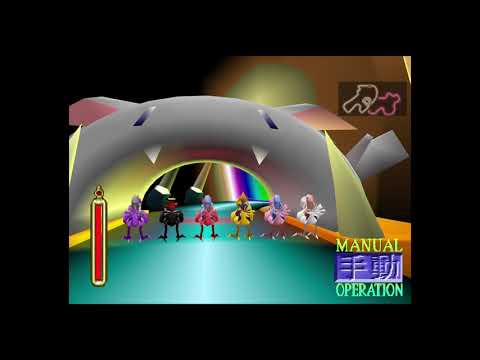
On completing the highest possible rank in races, the player gets a reward.
https://diablo-proposals.web.app/images/guidelines/shard-mount.jpg
A mount transmogrification.
In the Diablo series, this would be as an achievement and / or a mount transmogrification.
Mounts are perfectly acceptable in an isolated region acting as a Casino, or a Farm, where it is natural to bet on mount races, or compete other players in mount races.
Implementing a mini Mario Kart in the game brings chill, depth, and keep players engaged while developers are cooking new core features.
CASTLE RESTORATION
Lord Nasher rewards the player with command of the Keep. The player can then recruit soldiers, build fortifications and shops, and basically run their own land from the keep.
NeverWinter Nights 2 - Crossroad Keep
https://nwn2.fandom.com/wiki/Crossroad_Keep
https://diablo-proposals.web.app/images/guidelines/nwn2-crossroad-keep.jpg
https://diablo-proposals.web.app/images/guidelines/nwn2-crossroad-keep-2.jpg
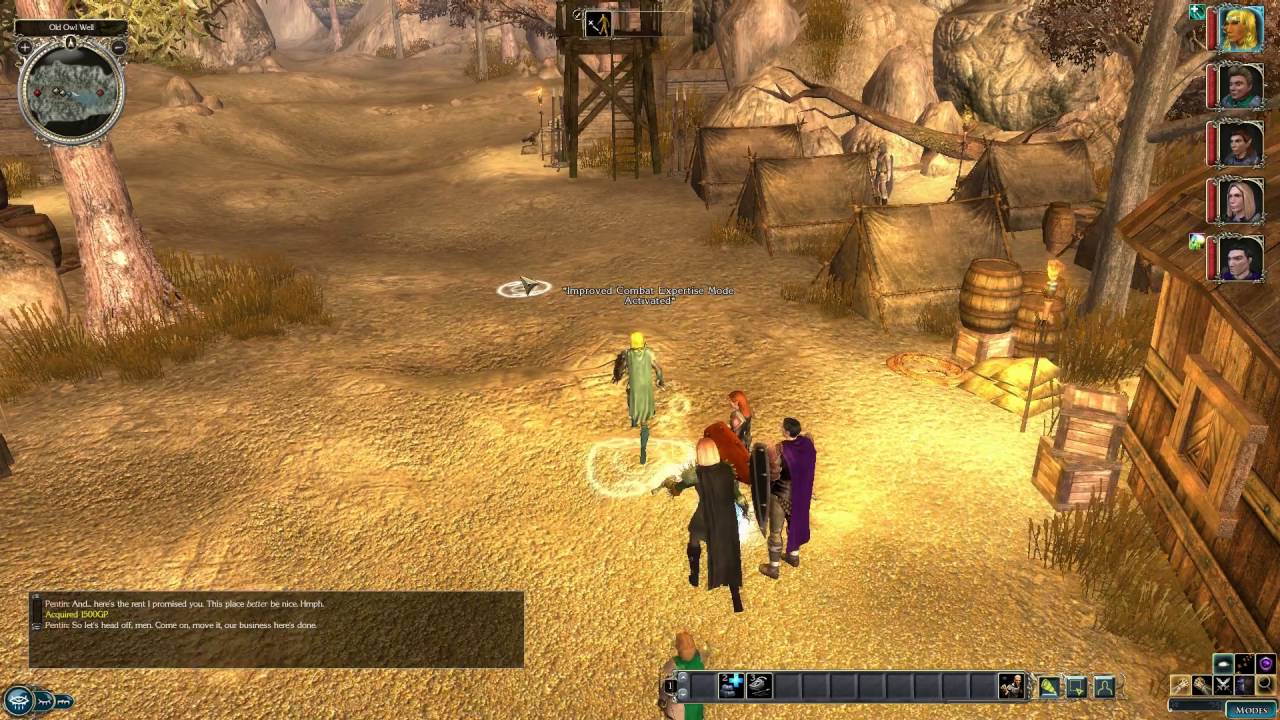
A player hires NPCs to fix its castle. Important NPCs trigger the immersive cinematic dialog mode.
In V-Rising, the player can build its own castle from zero:
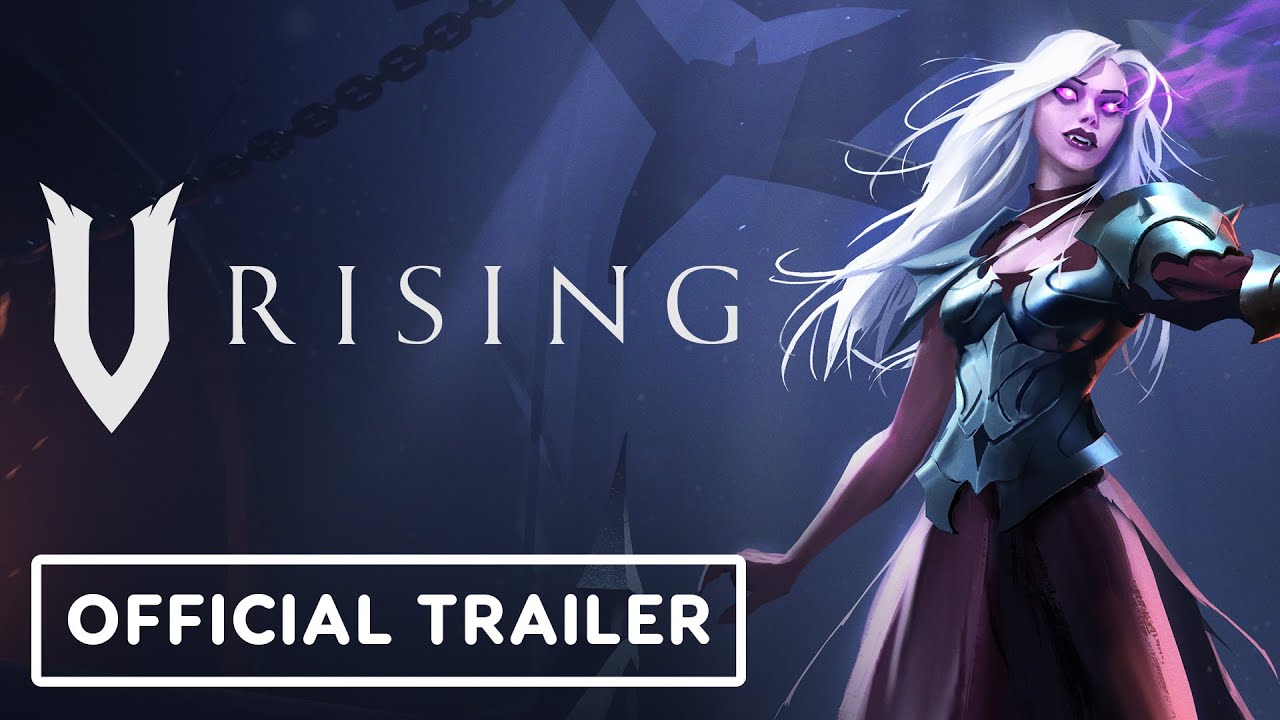
In a recent update, the castles can now be built on multi-levels:

Spending Gold to restore a ruined and costly castle is rewarding, and constitutes a long term objective.
In addition, such castles require lots of items for customization, which is great for the business model (Shop).
MULTIPLAYER
SOLO BY DEFAULT
The game should start in solo mode by default.
Players want to feel, in their guts, the loneliness of the dark and harsh world of Sanctuary.
When encountering other players, they:
- Display weird names
- Cast strange emoticons
- Do erratic movements
- Duplicate quest NPCs
- Kill your preys
- …etc.
These behaviors really break the immersion.
A toggle button activating the shared world should be available for the few players who still want to join a multiplayer game.
FAST SWAP
SWITCH HOTKEY
Diablo 2 offered a fast Weapon Switch Hotkey:
The whole point in having a special hotkey for this is to allow players to do it very quickly, as is required in a fast-paced action game like Diablo 2 or Diablo 3. Since the feature is optional to use, many players found it odd that the developers would remove it, rather than including it for those who wanted it.
Diablo Wiki - Weapon Switch
https://www.diablowiki.net/Weapon_switch_hotkey
It was never implemented in Diablo 3:
the weapon switch hotkey was not included in Diablo 3
Diablo Wiki - Weapon Switch
https://www.diablowiki.net/Weapon_switch_hotkey
TOWN ARMORY
Diablo 3 instead offered the Town Armory:
Players can save up to 5 builds loadouts. It remembers Paragon choices, as well as gear and skills. There is no cooldown for choosing builds.
Diablo Wiki - Armory
https://diablo.fandom.com/wiki/Armory
PORTABLE ARMORY
A Portable Armory would act as a Build Switcher, accessible anytime.
It would enable a fast swap between multiple builds.
The player could adapt to any situation (Elemental, Bounties, GR, Trash, Boss).
- Fast
- Hotkey
- 5+ builds
- Accessible anytime
- Cooldown because off-town (Low: 5 seconds)
ITEMIZATION
SETS
- Create dependencies
- Sequentialize powers
- Are oriented graphs
Dependency should be avoided in favor of granularity and composability.
Sets are a bad design.
KANAI CUBE
- Compete items
- Exist solely to extend the inventory
Kanai Cube should be avoided in favor of the Relics proposal (Any slot Any item).
Kanai Cube is a bad design.
IMPRINTING
- Compete with the loot mechanic
- Exist solely to make yellow items useful
Imprinting should be avoided in favor of Dynamic Quality computation and Procedural Powers (Chaos / Wild Powers).
Imprinting is a bad design.
DYNAMIC QUALITY
In Diablo 3 and Diablo 4, at level 50, a level 10 item with a power is still marked as legendary.
It makes no sense at all.
The quality should scale with the current character’s level:
- White: Common for character (current class / level / build)
- Blue: Magic for character (current class / level / build)
- Yellow: Rare for character (current class / level / build)
- Orange: Legendary for character (current class / level / build)
https://diablo-proposals.web.app/images/guidelines/item-level.jpg
This way, as the quality now depends on the character’s perspective (current character’s level), a white item can come with a legendary power.
The process is:
- When the item drop, The item rolls stats and possibly powers
- After stats are rolled, The quality is computed given the character’s level
- When the character levels up, the quality is re-computed
- Every time the quality is computed, it is stored in cache for X seconds (TTL)
- If no cache is available, the quality is computed dynamically
- If shared chest, 1 cache per character (cache name contains the character id)
The computation depends on:
- Adequation with the current skills deck
- The power granted by the bonuses targeting these skills
- The relative power to the current equipment
- Item power
For example, if a character has the skill Wandering Spirits equipped, and an item has an affix targeting Wandering Spirits, there is a high chance of coloration depending on the value of the bonuses granted by this affix.
It also means if the character changes, its deck, the colorations of items in its chest will change accordingly.
By introducing relative coloration as relative comparison, the player immediately knows if the new item is better.
The loot filter can help to hunt specific affixes, to ensure they are not disregarded, especially when the current build does not match the endgame targeted build.
LOOT FILTER
- Eliminate spam
- Hunt attributes
- Focus on game
https://diablo-proposals.web.app/images/guidelines/diablo-last-epoch-loot-filter.jpg
A Loot Filter allows us to remove items from our display that we no longer want to see. Items that are filtered out will still drop, but their nameplates will no longer show. This makes it much easier to see the items we want while avoiding unnecessarily sifting through gear that isn’t relevant to our build or isn’t valuable enough to pick up. A well crafted filter can literally save hours of time, allowing us to spend that time doing the fun stuff instead of worrying about the tedious task of comparing items and deciding whether to keep something or leave it on the ground.
Maxroll - Last Epoch - Loot Filter
https://maxroll.gg/last-epoch/resources/loot-filter-guide
Example from Last Epoch:
-
Recolor
- +1 to Wandering Spirits
-
Show
- +1 to Wandering Spirits
- Spell (but not Spell Critical Damage, nor faster cast)
- Necrotic
- Damage Over Time
- Intelligence
-
Show
- Generic Idols
- Tag targeting Idols
-
Show
- Unique
- Set
- Exalted
-
Hide everything
Additionally, in the Diablo series, an action could be attached to the “Hide everything” directive: Recycle or Sell.
Auto-Recycle / Auto-Sell unwanted items would almost eliminate the town loop.
The town is lava: The more players are playing, the more they enjoy the game.
SHARED CHEST
- Allows players to cheat
- Destroys core mechanics
- Makes leveling unfair
- Detaches players from the ground hard truth of the world they evolve in (alone in the dark)
Shared Chest is a bad design.
LEVEL REQUIREMENT
LEVEL 1 FRIENDLY
- No level requirement
- All items are equippable
LEVEL SCALING
Every item should:
- Scale its damage given character’s level
- Have different scaling thresholds (the more powerful, the bigger threshold / power shift)
- Explain what is the next threshold (next level threshold changes what characteristics)
- Advanced mode shows important thresholds (Ex: new powers at levels 5, 10, 15)
For example, if a Level 30 character drops a Level 35 item, it can instantly equip the Level 35 item, but the implicit statistics (affix and powers) will be reduced by 30/35 = x0.85 of its initial values.
For values that goes in the other direction (values were bonus decreases instead of increasing), like -X seconds, the penalty would be 35/30 = x1.16).
For example:
https://diablo-proposals.web.app/guidelines#level-scaling_
This way:
- All items are equippable
- All items are interesting
- All items are different given current character’s level
- Power is predictible (player can plan its leveling strategy)
Because the power of items scales with character’s level, it means loot is less needed, thus should be more scarce.
AFFIX REQUIREMENT
- All items are different
- All items are interesting
Items could roll conditions to trigger some of their affixes.
For example:
- +2 Strength when Skill X is equipped
- +4 Intelligence when Skill Y is active
- +6 All Attributes when Life over 80%
- x10% Dexterity when Dexterity over 50
- +15% Willpower when Level over 21
For a given item, the unactive affixes should be displayed at 30% opacity.
Using Affix Requirement, every game feels different, which is great for replayability (fights boredom).
GEMS
- Compete items
- Occupy 1 slot
- Look all the same
Diablo 2 offered runes, while Path of Exile offered gems.
Gems / runes have an advantage over items, as they occupy exactly 1 slot.
The downside is, if created in enough quantity, they look all the same.
https://dhost1.mmomiss.com/upload/userfiles/images/PoE_Synthesis_New_Skill_Gems-1551941800.jpg
With only a 1x1 space, their graphical representation doesn’t scale.
Gems are a bad design.
SOCKETS
- Superimposed
- Additional slot
Sockets are often superimposed on items, which limits the items visibility.
https://www.goldkk.com/upload/20190114/6368308542079919036028341.png
Path of Exile 2 externalizes the sockets in a dedicated UI.
https://static.wikia.nocookie.net/pathofexile_gamepedia/images/1/1e/4.0.0_skill_screen.png/revision/latest?cb=20191116160943
Final Fantasy 7 also did that in 1997.
https://static.wikia.nocookie.net/finalfantasy/images/b/bd/FFVII_Materia_Menu_4.png
This old poultice on on a wooden leg does not solve the root cause.
Sockets have been invented to extend an artificially limited number of slots.
If the number of slots was increased, Sockets would lose all meaning.
Sockets are a bad design.
INVENTORY
13 SLOTS
In most games, the arbitrary limit of the number of equippable items is often mapped to the physical world:
- 1 Head: 1 Helm
- 1 Neck: 1 Amulet
- 2 Shoulders: 1 Pair of Pauldrons
- 2 Feet: 1 Pair of Boots
- 10 Fingers: 2 Rings
- …etc.
This number of slots defines the number of combinations for the player’s equipment.
For example, 13 equippable slots means only nbItems ^ 13 possible combinations, which will be quickly explored by players.
Rather than bounding the number of equippable item slots to the physical world, it is preferred to think the inventory as a bottomless bag.
13 slots inventory is a bad design.
ANY ITEM, ANY SLOT (RELICS)
- Up to N slots (N >= 50)
- No specialized slot (Ex: 2 helms, 3 gloves, 4 boots, 5 weapons)
- No specialized item (No class)
- All combinations are possible
- If multiple weapons, compute their average damage
This proposal is inspired by the Warcraft 3 Inventory:
https://diablo-proposals.web.app/images/guidelines/warcraft-3-inventory-human-1.jpg
https://diablo-proposals.web.app/images/guidelines/warcraft-3-inventory-human-2.jpg
https://diablo-proposals.web.app/images/guidelines/warcraft-3-inventory-human-3.jpg
https://diablo-proposals.web.app/images/guidelines/warcraft-3-inventory-human-4.jpg
https://diablo-proposals.web.app/images/guidelines/warcraft-3-inventory-orc-1.jpg
https://diablo-proposals.web.app/images/guidelines/warcraft-3-inventory-orc-2.jpg
https://diablo-proposals.web.app/images/guidelines/warcraft-3-inventory-orc-3.jpg
https://diablo-proposals.web.app/images/guidelines/warcraft-3-inventory-orc-4.jpg
As said previously, a 1x1 representation does not scale on a 50 or 100 slots inventory.
It is preferable for icons to be represented on larger dimensions, at least 1x2 (width, height).
A Diablo 3 Version could be:
https://diablo-proposals.web.app/images/guidelines/s65-any-slot.jpg
A Diablo 4 Version, using the Omnistash (stash accessible anywhere, eliminates the inventory), could be:
https://diablo-proposals.web.app/images/guidelines/diablo-4-proposal-2-omnistash.jpg
ITEM IDENTITY
In Diablo 4, items roll powers independently from their graphical representation:
- Great for entropy (Lots of combinations)
- Great for developers (art decoupled from powers, they scale independently)
- Bad for players (Loss of identity, cannot recognize the item/power at first glance)
In an attempt to carry the need of strong identity, Diablo 4 Developers shipped Unique items (1 art = 1 power).
But these items are very elitist: Some even drop at level 85+, a threshold that most players will never reach.
In addition, the number of Unique items is limited, and do not address the loss of identity observed on the legendary items, which represent the vast majority of powerered items equipped by players.
Using the Any item, Any slot proposal, players are no longer limited to only 13 specialized slots.
It means powers can be sticky again to their graphical representation, just like they were in Diablo 3.
This stickyness (1 art = 1 power) is desirable for player’s memory, and to ensure that no player rolls all its powers on Two-Handed weapons exclusively (Like, 50 slots filled with 50 Two-Handed weapons).
Having items with sticky powers does not mean that, aside, items with randomly generated powers cannot exist.
The solution is not mutually exclusive to one or another, and might be an hybrid approach.
One rule of thumb could be:
Items are randomly generated by default, but character has a 10% chance to roll a well-known item having a unique representation, identifiable at first sight.
This well-known item could then be used in theory crafting guides, as a common language.
Whatever the solution is, the casual / average player expects accessible / low level items with strong identity.
In conclusion, despecializing slots and extending their amount is the way to go for mass strong item identity.
PROCEDURAL ITEM ART
Aside well-known appearances, some of them, whenever it is possible, shall be generated.
Using procedural appearances, every game feels different, which is great for replayability (fights boredom).
POWERS
GLOBAL INCREASE
- Power creep
- All build look the same
- Destroys build diversity
When releasing a MVP, builds are generally scarce, so developers create items with global power increase.
As a result, a player having 75% of items from its build A can still beat the endgame using the skill B.
This orientation makes no sense at all, and completely ruins the build diversity, as 75% of items are shared between builds.
The player feels that its choices have no impact at all, it just needs to change 1 item and here we go.
Global power increase is a bad design.
SKILL INCREASE
- Contained
- Specialized
- Promotes build diversity
Any skill, alone in the skill bar, should be enough in endgame.
Other skills can add small percentages (x5%), defensive options, or change gameplay (Ex: multishot if equipped).
This approach uses the following principle:
Easy to use (single skill, 80% of damage), hard to master (other skills, 20% of damage).
This means any skill should have an option to deal damage, and an option to be used as tooling or a catalyzer.
The options exist in the form of specialization nodes (cannot refer to another skill), or itemization (can refer to another skill).
POWER IDENTITY
- Well-know
- Identifiable
- Great base
Equivalent to D3 legendary items or D4 low level Unique items (1 art = 1 power).
PROCEDURAL POWERS (CHAOS / WILD POWERS)
- Chaos / Wild Magic
- All items are different
- All items are interesting
https://diablo-proposals.web.app/images/guidelines/chaos.jpg
A medieval representation of the Warhammer Chaos star.
Dungeons and Dragons has a notion of Wild Magic Surge, limited to 100 effects.
http://dnd5e.wikidot.com/sorcerer:wild-magic
Items that roll random powers should really roll random powers (rather than picking a power in a finished list).
Chaos / Wild powers are:
- String templates containing multiple variables (all can be rolled)
- Never crafted by developers, only the RNG gods have the right to do so
- No level requirement
- Not extractable
- Exclusive to Seasons
- Destroyed when Season ends (No crazy rolls on the permanent realm)
https://diablo-proposals.web.app/images/guidelines/mindmap.jpg
While wielding a dagger
For example :
(When / While A) Action B (Target C) (Duration D)
The action is mandatory. Everything else is optional, but with reasonable high chances to roll.
Inside every string part, values have a different chance to be rolled, some being rarer than the others.
Following the Dynamic Quality proposal, if a rare affix rolls, it must be reflected in the coloration score.
For the implementation, a good starting point is to list every affix / legendary power currently available, split it in tiny parts (condition, action, …etc.), put these parts into arrays, define roll chances for every part, define roll chances for every value, and let the RNG gods to create the item.
On roll, a templated string is created:
Every W seconds | next attack | casts | a Blood Rain | that creates | X Blood Orbs | with Y% potency | over Z seconds
The variables are then filled with values, rolled given their respective ranges (and other considerations).
Examples:
Every 7 [5 - 10] seconds, next attack casts a Blood Rain that creates 77 [50 - 104] Blood Orbs with 4% [3 - 5] potency over 5 [4 - 6] seconds.
When Stunned and Unhealthy, break free, restore 15% [10 - 20] health and deal 20% [10 - 30] to Beasts and Undeads for 3 [2 - 4] seconds.
While unarmed, become Vulnerable and gain the skill Command Skeletons at a 75% [50 - 100] potency.
While wielding a shield, after a critical hit or a lucky hit, your Skeletons gain 10% [5 - 15] Attack Speed for 10 [5 - 15] seconds and channel your equipped Decompose for 4 [2 - 6] seconds.
Because these powers are 100% RNG, they are anonymous (do not have a name).
Following the Dynamic Quality proposal, the coloration is relative to the character (current class / level / build).
Chaos / Wild powers make any item interesting, because they can potentially beat well-known powers.
A system of priority must be implemented, in case 2 items have the same trigger but different actions (2 skills).
In the end, there will be 2 kind of items:
- Items rolling well-known, completely static powers from a dictionnary (Like Diablo 3)
- Other items with Chaos / Wild powers, procedurally generated, completely crazy or stupid given the roll
Chaos / Wild powers make any item interesting, because they can potentially beat well-known powers.
Using procedural powers, every game feels different, which is great for replayability (fights boredom).
An infinite stash with an efficient Okapi BM25 Search engine (Ex: ElasticSearch) might be useful.
PETS
Meaningful permanent Pets are customizable.
This includes Skeletons, Wolves, Vines, Ravens, …etc.
PETS’ ITEMS
https://diablo-proposals.web.app/images/guidelines/diablo-4-proposal-19-equippable-skeletons-bone-transmogs.jpg
In Dungeons and Dragons, Skeletons can be equipped individually.
This equipment determines the abilities of the Skeleton.
Because Skeletons are humanoïds, they can be equipped with player’s surplus, which adds a third option “Reuse” rather than Sell or Recycle.
It is also possible to imagine items that only Pets could equip:
Examples:
THE REAPER’S TOLL
0.1% [0.1 - 0.3] Chance on hit to instantly kill enemies.
(Skeleton only)
LITTLE FINGER
10% [5 - 10] Attack Speed while wielding 2 daggers.
(Skeleton only)
DEFILED PUDDLE
3% [2 - 4] Chance on hit to cast the Necromancer’s equipped Blight.
(Skeleton only)
TREACHERY
7% [5 - 10] Sneak Damage while wielding a light weapon.
(Skeleton only)
Sneak Damage: When attacker is behind its target. Light weapon: Dagger or Short Sword.
One might suggest to create a Pet template to apply equipment to all Pets.
But that would be too easy.
Pets can also be very different: A druid can spawn Ravens, Vines and Wolves.
Equipping every Pet individually brings more fun and customization options.
If the player wants all its Pets to wear the same equipment, it should collect duplicates of these items.
This way:
- Granular items
- Composable builds
- Companions as Followers
CUSTOM APPEARANCE
In Divinity Original Sin 2, Fane (a Skeleton) can get lots of appearances:
https://store.steampowered.com/app/435150/Divinity_Original_Sin_2__Definitive_Edition
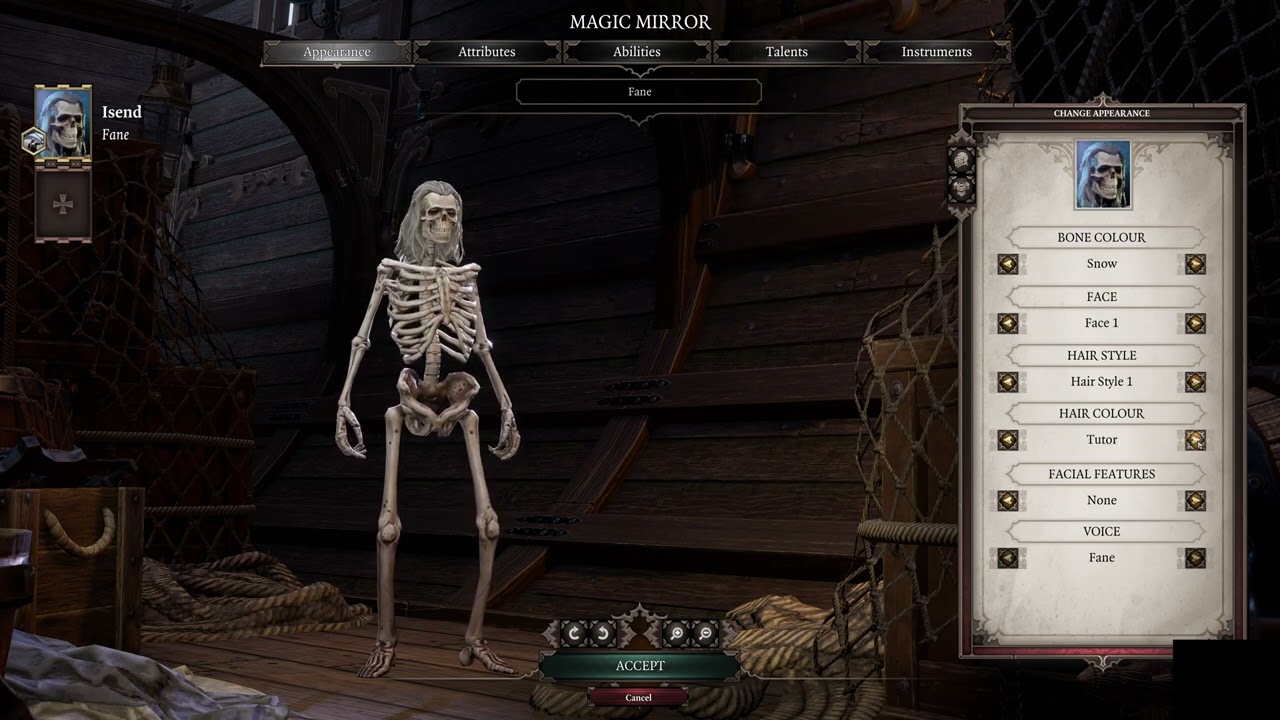
Custom appearances could be applied individually, or on all companions at once (like items global coloration).
SHOP
MACRO TRANSACTION
- Big price: $20
- Sell Packs, with things players don’t need, to justify the big price
- Virtual currency #1, to trick players to forget about the big price
- Virtual currency #2, to trick players to forget about Virtual currency #1
$20 is not a micro transaction.
Force-Selling packs using virtual currency to artificially reach a minimum cart price of $20 is a bad design .
MICRO TRANSACTION
- Granular items
- Composable carts
- Small Item Price: $0.20
- Minimum Cart Price: $1
- Detailed statistics
Remember the law of the market:
Profit = Price x Quantity
Every item should be buyable independently at a very low price, $0.20.
The minimum cart price should also be very low, $1.
Using a PSP (Payment Service Provider) like Stripe, every transaction over $1 is profitable.
Maybe not by much, and no one wants to works for its PSP, but developers have to think quantity over price.
A very small price will reduce friction, especially in emerging countries, and will trigger billions of transactions.
On the product page, a recommandation engine (users who bought this also bought this) will help to upsell.
Finally, granular statistics will help the marketing team to push and promote popular products.
FACETED SEARCH
- Granular Filters
- Composable Filters
https://diablo-proposals.web.app/images/guidelines/diablo-4-proposal-21-shop-faceted-search.jpg
E-commerce websites have a long experience of selling goods to customers.
Faceted Search is the way to go.
AUTOMATION
- Preserves Controllers
- Relieves Carpal Tunnel
- Teaches Programming
- Emphasizes Intellect over Reflex
TRIGGER
Contingency was an evocation spell that allowed a caster to set a trigger for another stored spell.Forgotten Realms
Contingency
https://forgottenrealms.fandom.com/wiki/Contingency
Chain contingency was an uncommon and very powerful evocation spell that allowed the caster to store up to three spells, which were immediately cast under a certain condition.Forgotten Realms
Chain Contingency
https://forgottenrealms.fandom.com/wiki/Chain_contingency
Trigger effects cause a skill to activate instantly when a specified condition is met.Path of Exile
Trigger
https://pathofexile.fandom.com/wiki/Trigger
ENDGAME
BOT LEAGUE
Pushing the concept further, why not offer botting as a feature ?
Sentient programs. If real is what you can feel, smell, taste and see, then real is simply electrical signals interpreted by your brain.Morpheus, The Matrix
The game Nimbatus, The Space Drone Constructor realized this vision, with an incredible depth:
https://store.steampowered.com/app/383840/Nimbatus__The_Space_Drone_Constructor
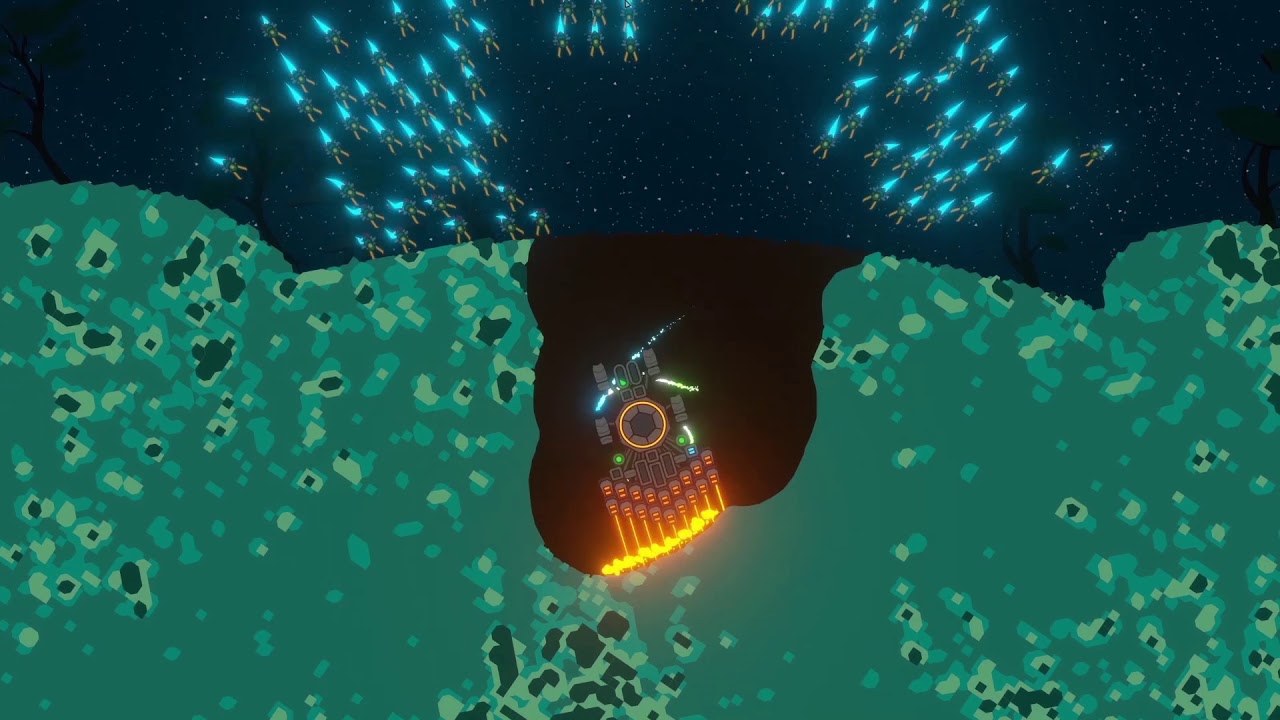

Autonomous drone programming using logic and sensor parts
Nimbatus - Press Kit
https://strayfawnstudio.com/presskit/sheet.php?p=nimbatus_the_space_drone_constructor
After completing the story mode using the traditional manual control, the player jumps into the endgame. It must complete the story mode by exclusively using a fully automated drone.
This league requires the player to create a build with sensors (triggers), logical connectors (AND, OR, XOR, NOT, …etc), and effects (weapons, shields, energy), ensuring they work all together to achieve the objective of handling any possible situation.

An auto-factory creating mining drones. Neither the factory nor drones are controlled. Everything is automated.
The player launches the improved drone, then supervizes the progress made since the last failure. The player loops until it reaches the end of the story with its fully automated build.
Automated mode is very challenging, moreover when mixed with the hardcore mode.
This endgame mechanic transitions the classic ARPG (Action Role Playing Game) into a modern ARNG (Automated Random Number Generator) game, where the environment tries to trick the Bots.
It opens new leagues possibilities, like:
- Bot VS Environment
- Bot VS Bot
WORLD
MAP EDITOR
Speaking of supervision, why not embody the role of a Dungeon Master ?
StarCraft 2 offers a Map Editor and distributes mods through an in-game marketplace called the “Arcade”.
https://diablo-proposals.web.app/images/guidelines/sc2-editor.jpg
https://diablo-proposals.web.app/images/guidelines/sc2-arcade.jpg
These crowd-sourced realizations allowed Starcraft 2 to live a long life and keep players entertained, while developers were working on core features.
Examples of creations:
- Dungeons
- Arenas
- Race Circuits
Such extensions can emphasize endgame botting features.
REPLAY IN HIGHER DIFFICULTY
- Travel back in time
- Alternate timeline
- Multiverse
https://diablo-proposals.web.app/images/guidelines/d2-difficulty.jpg
In Diablo 2, everytime a character finishes the story, it restarts it from zero in a higher difficulty mode, travelling through Normal, Nightmare and Hell difficulties.
This mechanic is essential for the sense of progression.
An important flavor of the Re-do fantasy is to introduce small random variations.
Using a randomized Re-do mechanic, every run feels different, which is great for replayability (fights boredom).
ACTS LINEARITY
LINEAR WORLD
In Diablo 2, Acts are tighly coupled to the world.
Acts are linear and must be completed in order to finish the story.
Once discovered, Waypoints allow players to travel between Acts.
The Acts linearity brings the sense of progression.
OPEN WORLD
In Diablo 4, Acts are loosely coupled to the world.
In an Open World, all regions are somehow connected.
The player can potentially be anywhere anytime.
The region’s monster level might be mapped on the player’s level.
How to ensure a story linearity in such conditions, while constantly renewing the interest of the player ?
For renewal, the game could start in a random city, and the main quest would adapt accordingly.
For linearity, the story could be mandatory, introducing points of passage to other regions or cities, whom gates would be initially closed.
The World would be open, but not so open, full of closed spaces.
Optimizing the unlocking sequence would be the routine of every skilled player.
https://diablo-proposals.web.app/images/guidelines/hyrule-atlas.jpg
In The Legend of Zelda: Ocarina of Time, the player can reach any region.
https://zelda.fandom.com/wiki/Locations_in_Ocarina_of_Time
The main quest consist in finding multiple fragments of the Triforce, by helping every tribe.
It makes sense to be able to reach several parts of the World, each of them bringing its own linear path.
The Hyrule Field acts as a hub linking all these regions, but some places remain locked until all conditions are met, in order to progress into the main quest.
For example, in the original adventure, the player starts in the Kokiri Forest, and is not able to leave this place until it beats Queen Gohma, a spider boss located in the Deku Tree.
If the starting location was randomized, the player could start its adventure anywhere: the Gerudo Valley, the Lake Hylia, Goron City, Zora’s Domain, …etc.
ADVENTURE MODE UNLOCKED PER CHARACTER
Starting a character in Adventure mode should be prohibited.
Adventure mode should be an end-game reward, after beating the highest difficulty (Hell)
Moreover, it should be unlocked per character (not globally).
The alternative is D3 Rifts (randomly generated pocket dimensions), or a procedural World.
GOOGLE MAPS
A more realistic map would help to locate things.
The player would instantly recognize snowy and desert regions.
Using the Avatar World map, a non-realistic 2D perspective view would be:
https://diablo-proposals.web.app/images/guidelines/avatar-world-map.jpg
Using the Final Fantasy 7 World map, a non-realistic 3D perspective view would be:
https://diablo-proposals.web.app/images/guidelines/ff7-world-map.jpg
Using the Final Fantasy 7 World map, a realistic 2D top view would be:
https://diablo-proposals.web.app/images/guidelines/ff7-google-maps.jpg
PROCEDURAL WORLD
In Diablo 2, the world changes everytime the player logs in.
https://diablo-proposals.web.app/images/guidelines/d2-camp-north-west.jpg
https://diablo-proposals.web.app/images/guidelines/d2-camp-north-east.jpg
https://diablo-proposals.web.app/images/guidelines/d2-camp-south-west.jpg
https://diablo-proposals.web.app/images/guidelines/d2-camp-south-east.jpg
It makes the player feel the world changed since its last visit, leading to a living world.
It also creates the sensation of parallel worlds (multiverse).
No Man’s Sky heavily uses procedural generation:
https://store.steampowered.com/app/275850/No_Mans_Sky
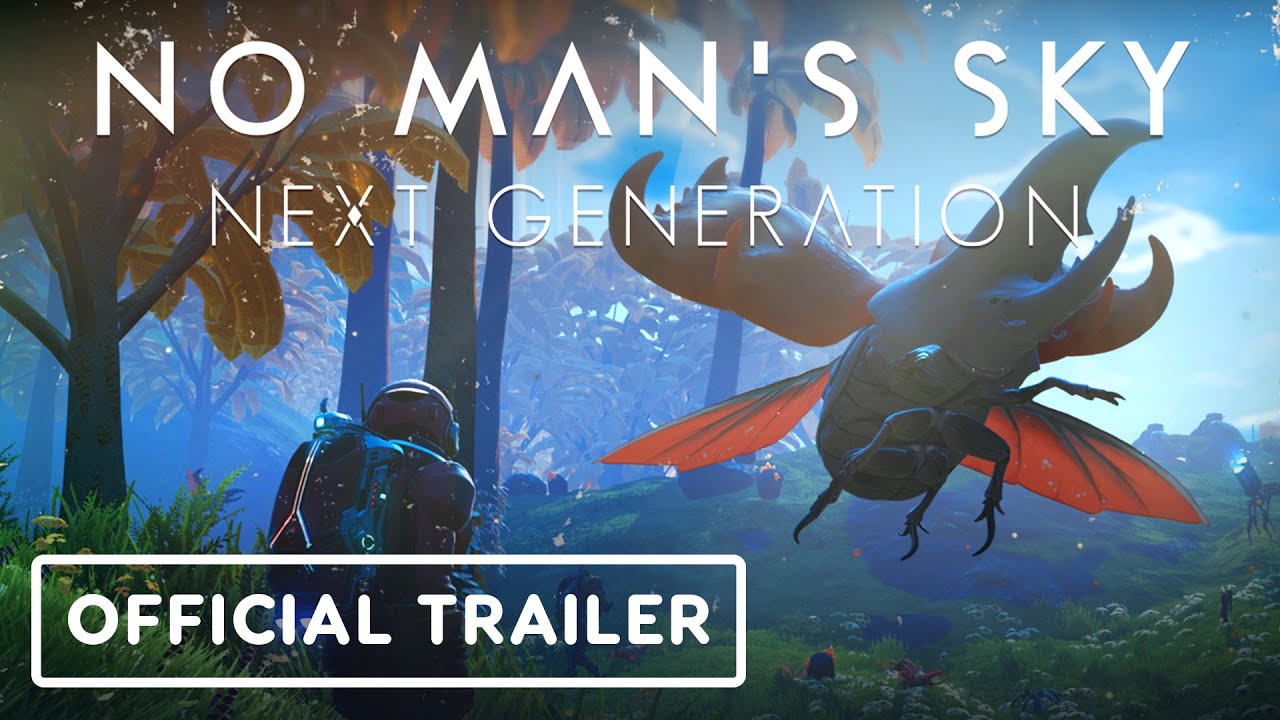
Using a procedural world, every game feels different, which is great for replayability (fights boredom).
CONCLUSION
- Granularity
- Composability
- Combinatorial
- Procedural
- Customization
- Automation
–
Other proposals
https://diablo-proposals.web.app


